
What Is an Ace in Poker? High, Low, Odds and Kicker Rules
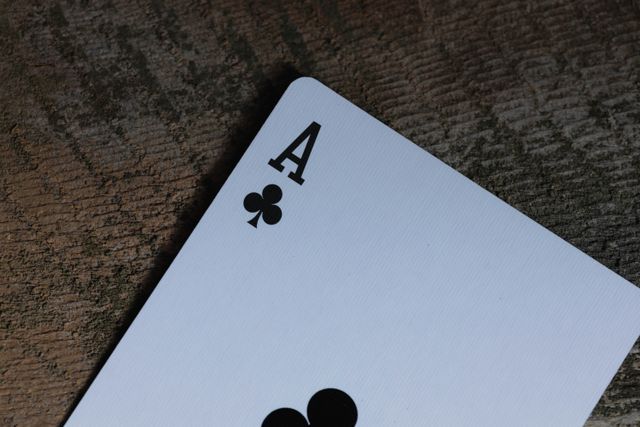
What Is an Ace in Poker? High, Low, Odds, and Kicker Rules
In poker, an ace is the highest-ranking card. It outranks a king, completes the highest straight (A-K-Q-J-10), and is essential to a royal flush. An ace can also play low in the A-2-3-4-5 straight, known as the wheel. That flexibility makes it valuable, but one ace alone is not always a strong hand. If two players pair their aces, the kicker often decides who wins.
What is an ace in poker?
An ace is the top-ranking card in a standard 52-card deck when playing high-hand games such as Texas Hold'em, Omaha, and Seven-Card Stud. It can count as the low card in a wheel straight (A-2-3-4-5). There are four aces in a deck, one of each suit, and no suit outranks another at showdown.
Is the ace the highest card in poker?
Yes, in standard high-hand poker. The ace usually ranks above the king, but it can sit below the 2 when forming a wheel straight:
• Broadway straight: A-K-Q-J-10 is the highest possible straight, with the ace at the top.
• Wheel straight: A-2-3-4-5 is the lowest straight. It loses to 2-3-4-5-6.
• No wraparound: Q-K-A-2-3 is not a straight. The ace can be high or low in a straight, but it cannot connect the king to the 2.
The ace also matters in four of a kind, full houses, and flushes. For a deeper breakdown, G7 Poker explains what is an ace in poker in each hand ranking, including why an ace is so often part of the nuts in Texas Hold’em.
Ace value in high games vs lowball games
An ace does not have the same value in every poker variant:
• Texas Hold'em, Omaha, and Seven-Card Stud: the ace is high in normal hand comparisons and can complete the low wheel straight.
• Omaha Hi-Lo and Stud Hi-Lo: an ace can help make both a high hand and a qualifying low hand. A low hand needs five different ranks of 8 or below. Omaha players must use exactly two hole cards for either hand.
• Razz, A-5 lowball, and Badugi: the ace counts low. A-2-3-4-5 is the best Razz and ace-to-five lowball hand. Badugi ranks four-card hands with different suits and ranks.
• 2-7 Triple Draw: aces count high and work against you. Straights and flushes also count against a low hand; the best possible hand is 7-5-4-3-2 with no flush.
Check the variant before you play. The same ace can be valuable in one game and a drawback in another.
Texas Hold'em ace odds and equity
These are approximate preflop figures for Texas Hold'em. The equity examples assume random opposing hands where specified:
• Dealt at least one ace: 14.9%, or about 1 in 7 starting hands.
• Dealt pocket aces: 0.45%, or exactly 1 in 221 starting hands.
• Pocket aces against random opponents: about 85% equity against one hand, but only about 35% against eight hands.
• A-K vs A-5: A-K is the clear preflop favorite because it has a stronger kicker. The exact equity changes with the suits.
• A-2 offsuit vs one random hand: about 55% equity, compared with roughly 63% for K-Q suited.
How to evaluate an ace before the flop
Holding an ace is only the starting point. Your kicker, suits, position, and the action all matter.
1. Identify your kicker
Your second card matters when two players both have an ace. A-K and A-Q generally perform well against weaker ace-high holdings, while A-9 or A-5 can be dominated by a higher kicker. The kicker counts only if it is part of your best five-card hand. For example, A-5 and A-3 split the pot on a board of A-K-Q-J-9, since both make the same five-card hand.
2. Check whether the hand is suited
A suited ace can make the nut flush. When your two hole cards share a suit, you flop a flush draw about 10.9% of the time and a completed flush about 0.84% of the time. This is one reason A-5 suited can be worth opening from late position, while A-5 offsuit is often folded from early position.
3. Consider your position and the action
Weak aces are usually easier to play in late position and against fewer opponents. A raise or re-raise from a tight early-position player can represent a strong range, so calling with A-8 offsuit may be risky. Holding an ace also blocks pocket aces: before the flop, it reduces the opponent's possible A-A combinations from six to three. That alone is not a reason to call.
Common mistakes players make with aces
Treating every ace as a premium hand. A-2 offsuit is not automatically strong. Even after pairing your ace, you may be behind another player with a better kicker.
Thinking suits break ties. In standard poker, the ace of spades does not beat the ace of hearts. If players have the same best five-card hand, the pot is split.
Overplaying pocket aces against a large field. A-A starts ahead of every other individual hand, but its chance of winning falls as more opponents enter the pot. Raising preflop usually builds value and may help avoid an oversized multiway pot.