
Timing Tells Decoded: How to Read Your Poker Opponents Without Seeing Their Faces
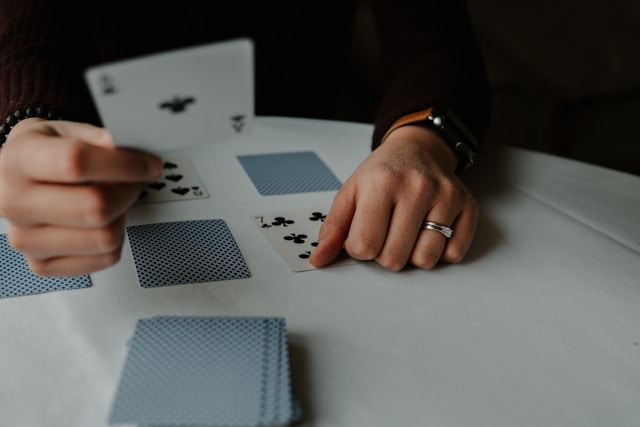
The obtuse movement of the hand, quick glancing at the chips, and scratching the neck… these are all tell-tale signs that something is going on beneath the surface. However, these visual cues only apply in a live casino setting, where you can observe your opponents' looks and behavior in real time.
But what of online poker? It's difficult to make readings if you can't see their faces. Still, the writing on the wall isn't lost. The data is still there, albeit in different shapes.
Instead of hand movements we have time tells. Instead of a mistimed scratch, there's the split-second decision-making. A prolonged reaction to an obvious play can be just as revealing as repeatedly checking chip stacks in a live game.
Top 3 Timing Tells in Online Poker
Online or not, you can read opponents through their timing and decision-making patterns. Let's explore some of the more obvious time tells and what they can reveal about your opponents. Likewise, we’ll see how you can exploit them. This is especially useful for online poker tournaments, where even the smallest advantage matters.
One note before we proceed. Before putting these skills to the test out in the wild, it's best to practice them in a controlled, low-pressure poker setting like PlayWSOP. These are social platforms and you'll receive free chips every day to join open tournaments without risking any money.
Right, here goes.
Instant Call
A quick call is rarely neutral. Most players need at least a moment to process ranges, pot odds, and board texture. When that natural pause is missing entirely, it usually means the decision was made beforehand.
This often points to a capped or marginal range, like a draw they've already committed to or a medium-strength hand. Occasionally, it may signal a trap, but less often than you may think. What it doesn't tend to be is a tough, high-strength decision. Strong hands usually invite at least a short pause as players consider sizing, raising, or disguising strength, or plainly basking in their imminent triumph.
How to exploit: Apply pressure on later streets. Instant callers tend to stick around, but can't withstand sustained aggression, particularly after you’ve already shown some skill.
Delayed Continuation Bet
This right here is one of the most underappreciated timing tells online.
A player raises the preflop, the flop comes, and they pause abruptly before firing a continuation bet. More than an advanced calculus, that slight delay often betrays hesitation. It suggests the board didn't connect cleanly with their range, and they're now figuring out whether to follow through. A manufactured c-bet if ever there was one.
How to exploit: Float wider in position. Delayed c-bets tend to shut down on later streets unless improved. You can take the pot away on the turn with well-timed aggression.
Quick Check
The quick check is the online equivalent of a shrug.
When a player checks instantly, especially out of position, it often indicates a lack of interest in the pot, a missed board, or better yet, the willingness to give up initiative. It can occasionally be a trap, sure, but at most stakes and especially in fast-paced environments, it's far more commonly a weakness than deception.
How to exploit: Take control. Bet frequently when checked too quickly, particularly on dry boards where your perceived range advantage is strong.
Pattern Recognition Writ large
Unlike a small home game, online poker tournaments require you to categorize opponents quickly based on limited data. You don't have hours of table talk or physical observation, just timing, bet sizing, and repetition. We'll discuss how to use the first two blind levels to identify player types without ever seeing their faces, as well as the best approach for each.
The Station: This type calls quickly and calls often. The timing is consistent, almost automated, and by the looks of things, they are more reactionary than strategic. The Station is betrayed by frequent calls and rare raises, and as a result, they don't fold under time pressure, so bluffing big won't ever work. Play it cool, instead.
The Aggressor: This one uses time as a weapon. Aggressors vary their pacing, act instantly, then pull back or pause deliberately to create confusion. Their timing signatures include a mix of snap bets and delayed aggression and occasional long tanks followed by large bets. To counterpunch them, tighten your calling range and let them build the pot before you strike.
The Trapper: This type is the most dangerous but also rare. They understand perception and check quickly, call even quicker, and delay aggression when the pot is already built. Play carefully against Trappers, particularly on later streets.
And remember, you're not trying to win every pot, but build opposition profiles and plan your reaction based on repeatable timing patterns.
Closing Remarks
Just because you can't see your opponents' faces doesn't mean you can't read them. The more subtle tells, such as quick reaction or delayed decision, are available in digital poker and can have enough in them to inform your next move.
Most players focus on cards, but just like stripping one sense enhances all the others, the edge comes from an amplified sense of timing. The very best online players notice how long – or how regularly – it took to decide and why. Master that, and you're no longer playing just the avatar in front of you. You're playing the player behind the screen.